A stormwater credit is a reduction in a property's stormwater charge, granted because the property manages some of its own runoff. It is the mechanism that makes the fee acceptable to large sites, and it is also the mechanism that quietly reduces the revenue a utility collects.
Stormwater credit: the reduction for on-site control
period FY2026 · Q3 — closes 2026-09-30folio 103recast the figures above move with the periodkept by The Scupper Ledger (a named ledger, not a person)
What is credited
Three families of practice, and they are credited for different reasons. Storage credits a basin, a tank or a swale that holds water back. Treatment credits a practice that improves the quality of what leaves. Flow-reduction credits a practice that reduces the volume or the peak, which is usually the thing the system is actually short of.
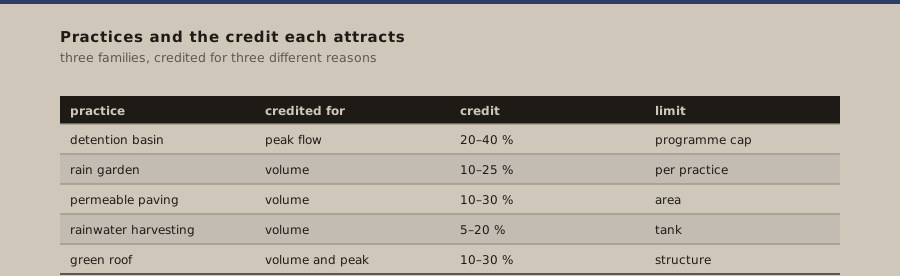
| Practice | Credited for | Typical credit | Cap |
|---|---|---|---|
| detention basin | peak flow reduction | 20–40 % | programme cap |
| rain garden | volume and treatment | 10–25 % | per practice |
| permeable paving | volume reduction | 10–30 % | area limited |
| rainwater harvesting | volume reduction | 5–20 % | tank sized |
| green roof | volume and peak | 10–30 % | structural limit |
The three things a credit does to revenue

It reduces the amount collected, it costs money to administer, and it changes the distribution of the remaining burden. A programme with a generous credit and a weak inspection regime ends up with less revenue than the rate study assumed and no evidence that the practices it credited still exist. Both halves of that sentence matter, and the second one is usually the one that is missing.
That is why the credit manual is a longer document than the fee schedule. It has to define what qualifies, how it is measured, how long it lasts, who inspects it and what happens when the practice is removed. A credit without an expiry and an inspection is a permanent discount granted for a temporary structure.
A stormwater credit is not the same as a rebate. A credit reduces a charge before it is billed; a rebate is paid back after the charge has been collected. The difference matters to the revenue forecast, because a credit reduces gross revenue and a rebate does not.
Where the definition stops
This page owns the credit. The charge it reduces is owned by the fee page, the area it is measured against by the impervious area page, and the procedure for pricing one by the green roof credit posting. Nothing here is repeated there.
Documents posted to this account
- 01Village of Western Springs Stormwater Utility Fee Credit Manualsupports the credit manual structure that the practice table follows
- 02City of Flagstaff Stormwater Utility Credit Manual (2023)supports the credit schedule and the cap applied to each practice
- 03Stormwater Utility Fee Credit Manual Update - City of Alexandria (2024)supports the recent revision of a credit manual and what it changed
Each line points at one specific document, with its own title as the link text. No line is a home page and no line is a search result.
ruled off Rule it off and stop Rule it off and stop once you know the cap and the expiry. A credit without either is a permanent discount.