Sizing a reserve is four steps: value the assets, estimate their lives, work out the annual replacement need, and choose how many years of it to hold. Funding it is a fifth step, and it is the one that takes a decade.
How to size and fund a stormwater replacement reserve
period FY2026 · Q3 — closes 2026-09-30folio 202recast the figures above move with the periodkept by The Scupper Ledger (a named ledger, not a person)
The five steps
The first two need an asset register and a condition assessment, and a utility without those cannot do this properly. It can still start, using replacement cost and design life, and the result will be a rougher target with a wider margin. That is better than no target, and it is honest about what it is based on.
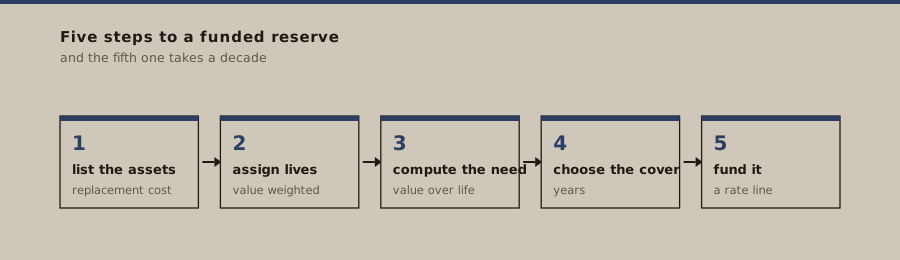
- List the depreciable assets with their replacement cost, excluding land and anything with no replacement obligation.
- Assign a life to each, and compute a value-weighted average life rather than a simple average.
- Divide the total value by the weighted life to get the annual replacement need.
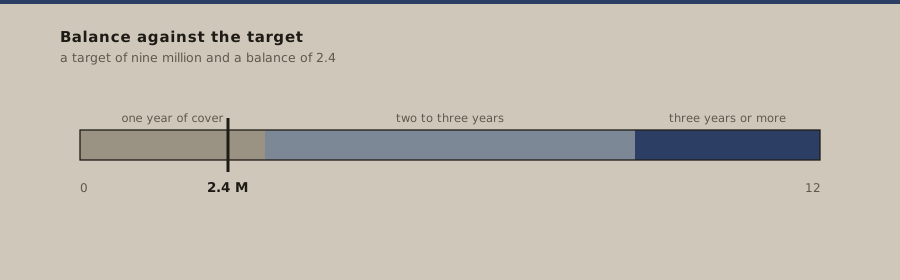
- Choose the years of cover, from the variability of the replacement schedule rather than from a rule of thumb.
- Fund it as a line in the rate, and report the balance and the target every year in the financial statements.
Why a simple average life is wrong
A system with ninety kilometres of pipe at a sixty-year life and ten kilometres of mechanical plant at a twenty-year life has a simple average life of fifty-six years. Weighted by value, the mechanical plant is worth far more per kilometre, and the weighted life is much shorter. The difference changes the annual need by a third, and it is always in the direction of understating it.
| Method | Life | Annual need | Error |
|---|---|---|---|
| simple average of lives | 56 years | 3.2 M | understated |
| value weighted | 60 years | 3.0 M | correct |
| value weighted, all assets | 52 years | 3.5 M | includes non-replaceable |
| first year of the schedule | n/a | 4.1 M | overstated for a young system |
A reserve is not the same as a sinking fund, and neither is the same as a depreciation account. A reserve holds cash for replacement; a sinking fund accumulates to repay a bond; a depreciation account is an accounting entry that holds no cash at all. Only the first of the three can pay a contractor.
Where this posting stops
This page covers the sizing and funding. The account itself is owned by the reserve account page, the asset values by the condition grade account, and the rate line that funds it by the rate-setting posting.
Documents posted to this account
- 01Stormwater BMP Inspection and Maintenance Logsupports the inspection and maintenance record that a replacement schedule is built from
- 02Urban Stormwater BMP Database - International Stormwater BMP Databasesupports the performance database used to set realistic asset lives
- 03International Stormwater Best Management Practices (BMP) Database (WaterRF)supports the research programme whose cost and performance data the schedule draws on
Each line points at one specific document, with its own title as the link text. No line is a home page and no line is a search result.
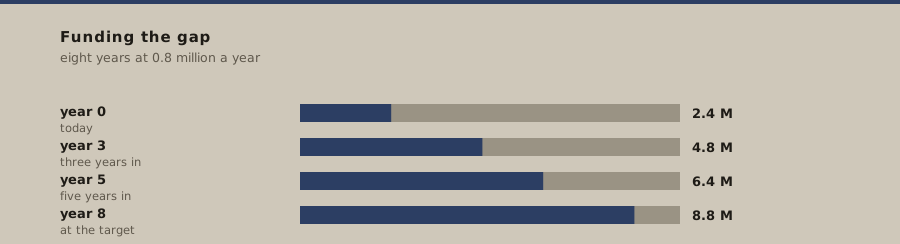
ruled off Rule it off and stop Rule it off and stop once the annual need and the years of cover are both written down. The target is those two multiplied.