An impervious area charge bills a property for the hard surface it presents to the rain: roofs, paving, and anything else that does not let water through. It is the most common billing basis because it is measurable, defensible and roughly proportional to the runoff a property creates.
Impervious area charge: the measurement rule decides the bill
period FY2026 · Q3 — closes 2026-09-30folio 102recast the figures above move with the periodkept by The Scupper Ledger (a named ledger, not a person)
What gets measured
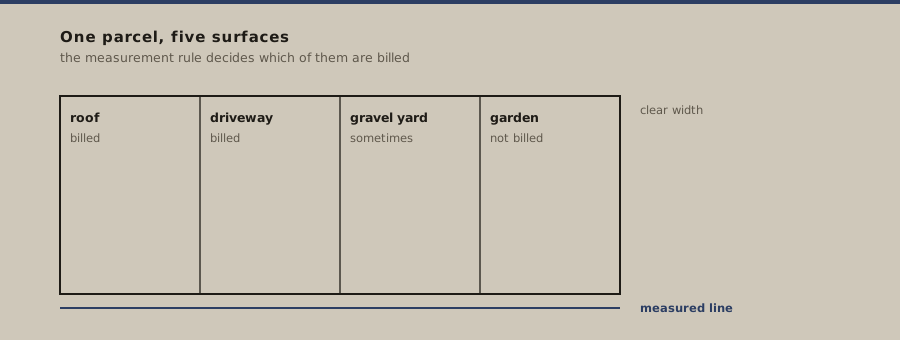
Aerial imagery, parcel records and sometimes a site visit. Roofs are unambiguous. Driveways, parking and loading areas are not: whether a gravel yard counts, whether a porous paver counts, and whether a roof that drains to a soakaway counts are all decisions the ordinance has to make in advance, because a billing system cannot argue with a ratepayer.
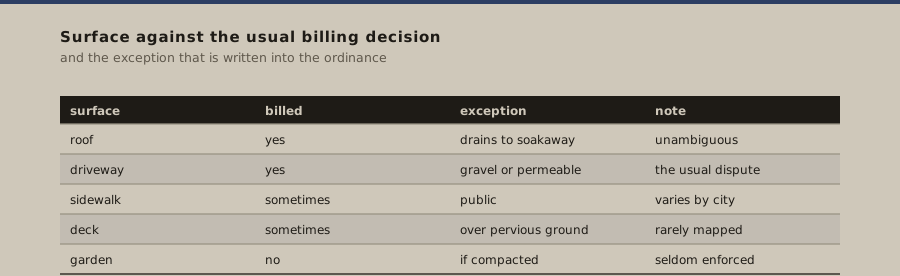
| Surface | Usually billed | Common exception |
|---|---|---|
| roof | yes | where it drains to a private soakaway |
| driveway and parking | yes | where it is gravel or permeable |
| sidewalk | sometimes | often excluded as public |
| deck and patio | sometimes | where it is over pervious ground |
| landscaped ground | no | unless compacted |
The equity question nobody prints
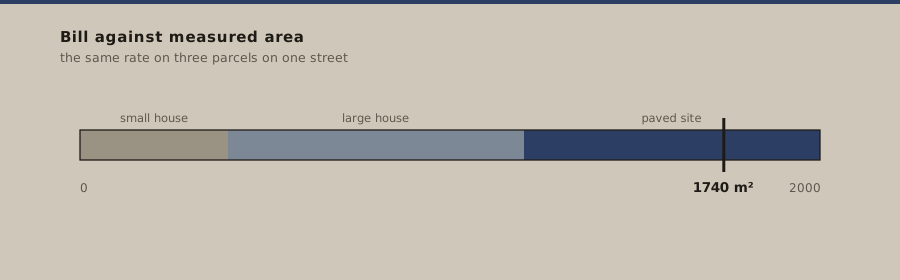
The rate study publishes the total revenue requirement and the total billed area, and divides one by the other. That arithmetic is neutral. What is not neutral is the measurement rule, because the rule decides which parcels are billed at all, and a rule that excludes gravel or permeable paving shifts the burden onto the parcels that remain.
Two jurisdictions with the same revenue requirement and the same rate per square metre can therefore produce very different bills for the same building. The difference is not in the rate; it is in the survey. That is why a rate study that publishes only the rate and the total is not enough to compare two cities, and why a comparison that ignores the measurement rule is a comparison of two conventions.
An impervious area charge is not the same as a water rate. A water rate is charged on metered consumption and falls when a household conserves; an impervious area charge is fixed by the property's surface and does not move with behaviour, which is why it is sometimes described as a fixed charge even when it is billed monthly.
Where the definition stops
This page owns the billing basis. The fee itself is owned by the fee page, the reduction for on-site control by the credit page, and the rate that multiplies the area by the rate-setting posting. Nothing here is repeated there.
Documents posted to this account
- 01Stormwater Fee Structure Design: Is One Fee Structure More Equitable?supports the analysis of whether one fee structure is more equitable than another
- 02Stormwater Tiered Rate System - City of St. Petersburg, Floridasupports the tiered rate system that bands the charge by measured area
- 03Stormwater Utility Rates: Frequently Asked Questions (St. Petersburg, FL)supports the ratepayer-facing explanation of how the billed area is determined
Each line points at one specific document, with its own title as the link text. No line is a home page and no line is a search result.
ruled off Rule it off and stop Rule it off and stop once you know what the ordinance counts and what it excludes. The bill follows the survey, not the rate.