A lifecycle cost model converts a stream of future costs into one figure today. Four inputs go in: the costs, their timing, the analysis period and the discount rate. The last two decide the result, and they are the two that are usually stated in a footnote.
How to run a lifecycle cost model on a drainage asset
period FY2026 · Q3 — closes 2026-09-30folio 204recast the figures above move with the periodkept by The Scupper Ledger (a named ledger, not a person)
The four inputs
Costs, timing, period and rate. Costs come from a cost database or a schedule of rates. Timing comes from the asset lives and the renewal cycles. The period and the rate come from the analyst, and they are the two that need a justification on the page rather than in a footnote.
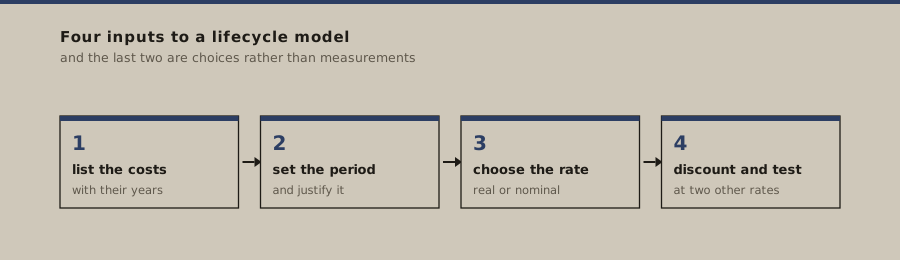
- List every cost with the year it falls in, including routine maintenance and every component renewal.
- Set the analysis period, and state whether it is the shorter asset's life, the longer one's, or a common multiple.
- Choose the discount rate, and state whether it is a real rate or a nominal one, because mixing them is a common error.
- Discount each year separately and sum, then test the answer at two other rates to show how much it depends on the choice.
The two errors that matter
The first is mixing a nominal discount rate with costs stated in today's money, or the reverse. The result is a figure that is wrong by the inflation assumption over the whole period, which on a sixty-year model is not a rounding error. The second is choosing an analysis period that favours one option: comparing a thirty-year asset with a sixty-year one over thirty years charges the long-lived asset for a replacement it will not need, and over sixty years charges the short-lived one for a second construction.
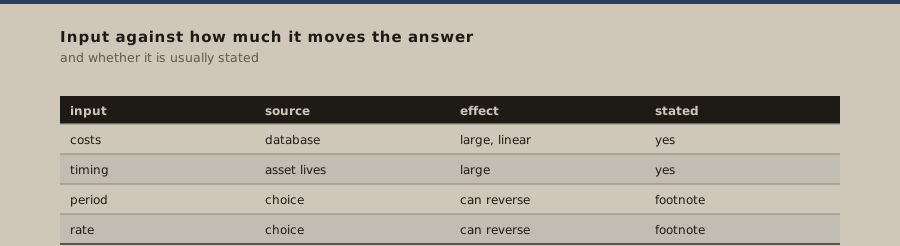
| Input | Source | Effect on the answer | Usually stated |
|---|---|---|---|
| costs | cost database or schedule | large, but linear | yes |
| timing | asset lives | large | yes |
| analysis period | analyst's choice | can reverse a ranking | footnote |
| discount rate | analyst's choice | can reverse a ranking | footnote |
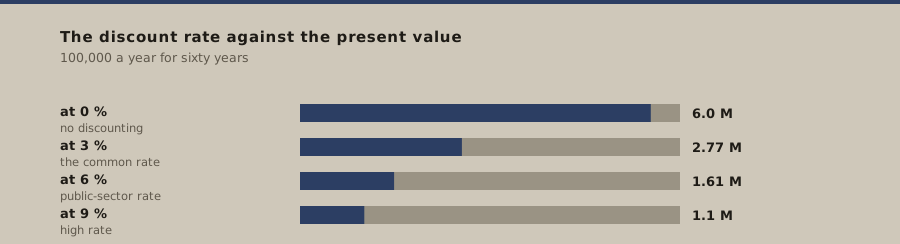
A lifecycle cost is not the same as a whole-life cost, and neither is the same as a total cost. Whole-life cost is the undiscounted sum; lifecycle cost is the discounted sum; total cost is whatever the writer meant. Where a comparison rests on one of these, the document has to say which one and at what rate.
Where this posting stops
This page covers the model. The method's definition is owned by the lifecycle cost account, the benefit side by the benefit-cost account, and the programme the ranking feeds by the capital plan account.
Documents posted to this account
- 01EPA Stormwater Calculator: Tool Overview and Guidance (GLISA)supports the calculator and guidance used to estimate the costs a model starts from
- 02Scaling Up for a Sustainable Stormwater Sector (WEF, July 2023)supports the sector-level analysis of what a sustainable stormwater programme costs
- 032024 Stormwater Ask Document (Water Environment Federation)supports the funding ask document that sets out the programme cost basis
Each line points at one specific document, with its own title as the link text. No line is a home page and no line is a search result.
ruled off Rule it off and stop Rule it off and stop once the period and the rate are stated on the page. Without them the figure is not comparable to anything.